

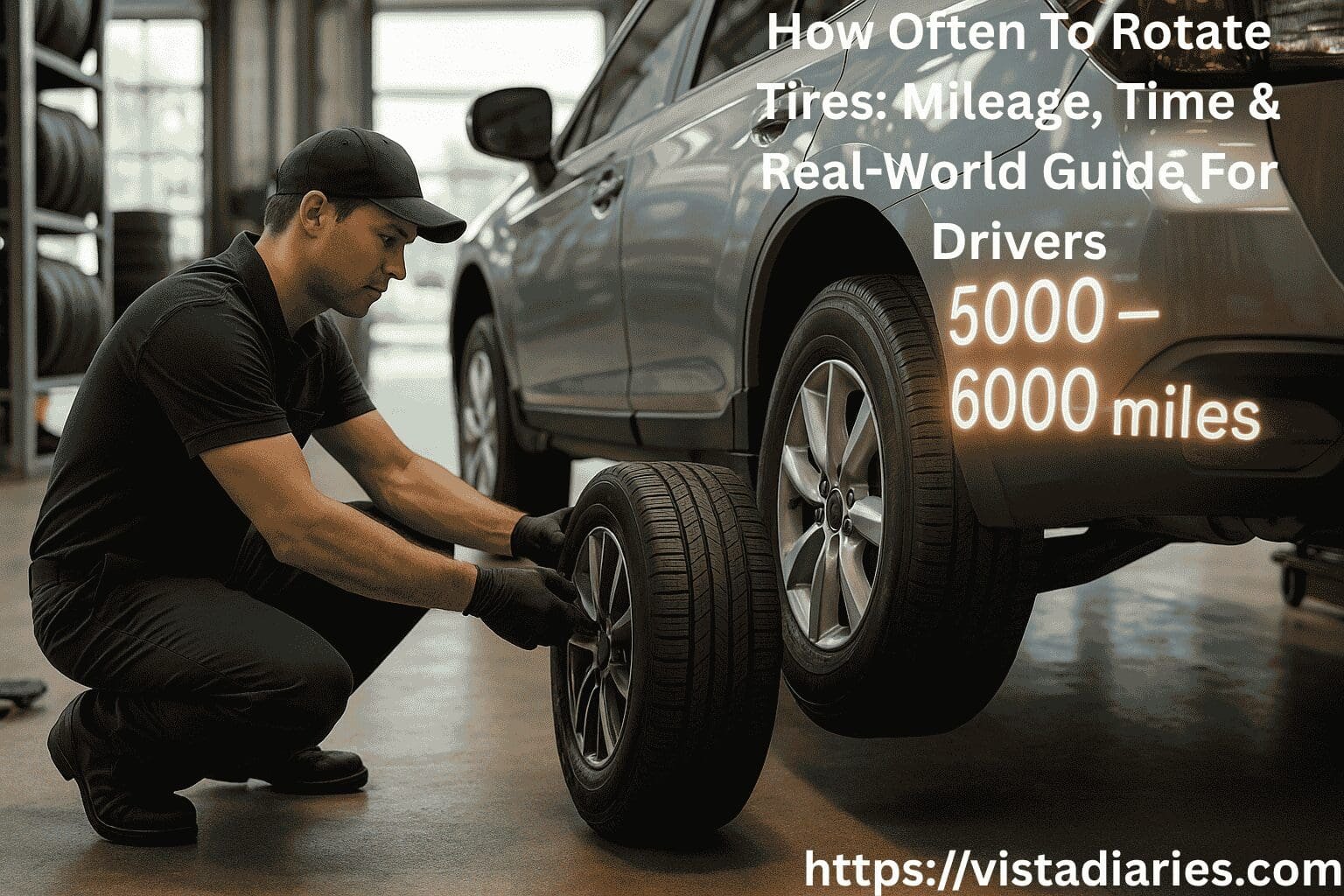
If you are googling how often to rotate tires or how often to rotate my tires, you are already ahead of many drivers. Tire rotation is one of the most cost-effective ways to enhance tire safety, grip, and longevity, but most people neglect it until the tread is worn out.
This guide provides you with some sharp mileage numbers, time periods, patterns for different drivetrains, and some real-world tips, so that you actually know what to do instead of theory only.
Perfect Rotation: How Often To Rotate Tires.
For most drivers, the proper and realistic tyre rotation should be:
- Every 8,000 to 10,000 km
- Every 5,000 to 6,000 miles
- A simple rule that works:
Rotate your tires every time you change engine oil (if you change oil around 5,000 – 6,000 miles).
If you drive supervisively, carry heavy loads, and live in extremely hot conditions, you should be closer to the lower end of the range. Consult your owner’s manual if you are unsure, but as a general rule, rotating your tires every 5,000 miles will help keep wear very even.
Why Tire Rotation is So Important
Failure to rotate is like wearing one shoe more than the other. Things still work for a while, but not for long.
Advantages of rotating tires:
Longer tire life
Giving the evenly distributed wear to all four tires means that you will have to replace the entire set later, rather than purchasing two tires at a time.
Better grip and safety
Uneven tread may decrease braking proficiency and the possibility of hydroplaning in the rain.
Quieter and smoother ride
Cupped or uneven tyres become wobbly, noisy, and cause vibration and wobbling at certain speeds.
Cheaper in the long run.
A tire rotation service near me is often more cost-effective than purchasing new tires prematurely.
If you want to outperform other sites and truly benefit users, always tie the how often to rotate tires question to these benefits, including real money and safety.
Recommended Vehicle Service Schedule for Changing Tires
Different drivetrains tend to load tires differently, resulting in varying tire rotation frequencies.
1. Front-Wheel Drive (FWD)
Most of the daily cars are Front Wheel Drive. The front tires are responsible for steering, braking, and transferring engine power; therefore, they wear out more quickly.
Interval: Every 5,000–6,000 miles
Pattern: From front to rear, and the reverse direction, and back to front.
Example:
- Front left → rear left
- Front right → rear right
- Rear left → front right
- Rear right → front left
A search on how often to rotate tires, specifically for Front Wheel Drive, will typically lead to this pattern.
2. Rear Wheel Drive or RWD and trucks
Here, the tires in the rear push the car, causing them to wear differently.
- Interval: Every 6,000–7,000 miles
- Pattern: Rear to front Cross Fronts rear
If you are carrying loads or tow, this is like heavy use, and you should stay closer to 5,000 miles.
3. All-Wheel Drive (AWD / 4WD)
For AWD to have greater benefits, all four tires must remain as even as possible. Wear can even destroy the drivetrain.
- Interval: Every 5000 miles is highly recommended
- Pattern: Follow the manufacturer of the vehicle, usually a cross pattern
So, if you are asking how often to rotate tires on an All Wheel Drive vehicle, the serious answer is:
- Do not stretch it.
- Keep it strict.
Warning Signs That Your Vehicle Needs To Have Its Tires Rotated
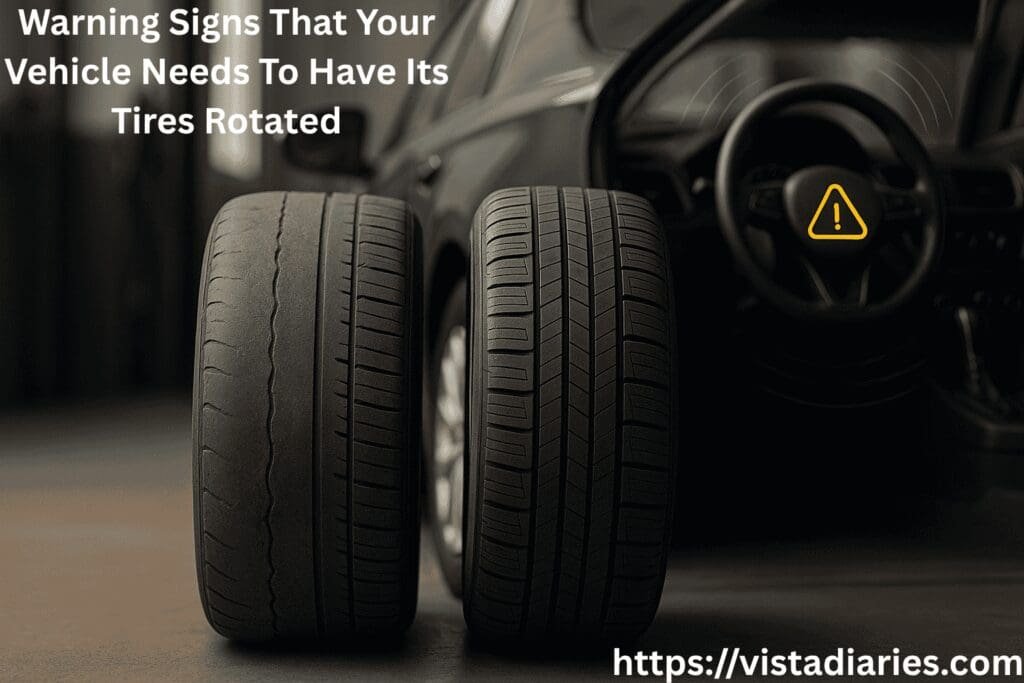
Even if you miss the mileage, your car usually indicates it. Watch for:
- Front tires are clearly worn more than the rear tires
- Vibration in the steering wheel at some speeds
- Constant pulling to one even after proper alignment
- The edge of the tread is feathered or cupped
- increase in the volume of road noise with an increase in speed
If you notice any of these issues, stop guessing when you should rotate your tires and call to have them rotated immediately.
What Happens If You Do not Rotate Your Tires?
Many people ask if their tires need to be rotated, or what happens if they do not rotate their tires. Real-world consequences are:
- Two of the tires become bald much sooner than the other tires
- Increased risk of blowouts and skidding, especially during wet weather.
- You end up buying two expensive tires earlier, and still have two half-used ones
- Increased vibration and reduced performance while riding
Skip a cheap tire rotation and balance service, and you may easily end up spending on a complete set of tires sooner than one or two years on the road.
Easy Guide for Remembering Your Tire Rotation
To make this practical to your reader(s):
- Link rotation with an identified milestone
- Every engine oil change
- Or every time you hit 5,000 miles / 8,000 km
Have a small note or message (digital) note in your phone:
- Tire rotation due at 60,000 km.
Many workshops also print the information on your invoice or place a sticker on the windshield indicating the subsequent tire rotation frequency. Encourage your users to keep track of that.
Do It Yourself Against Professional Tire Rotation
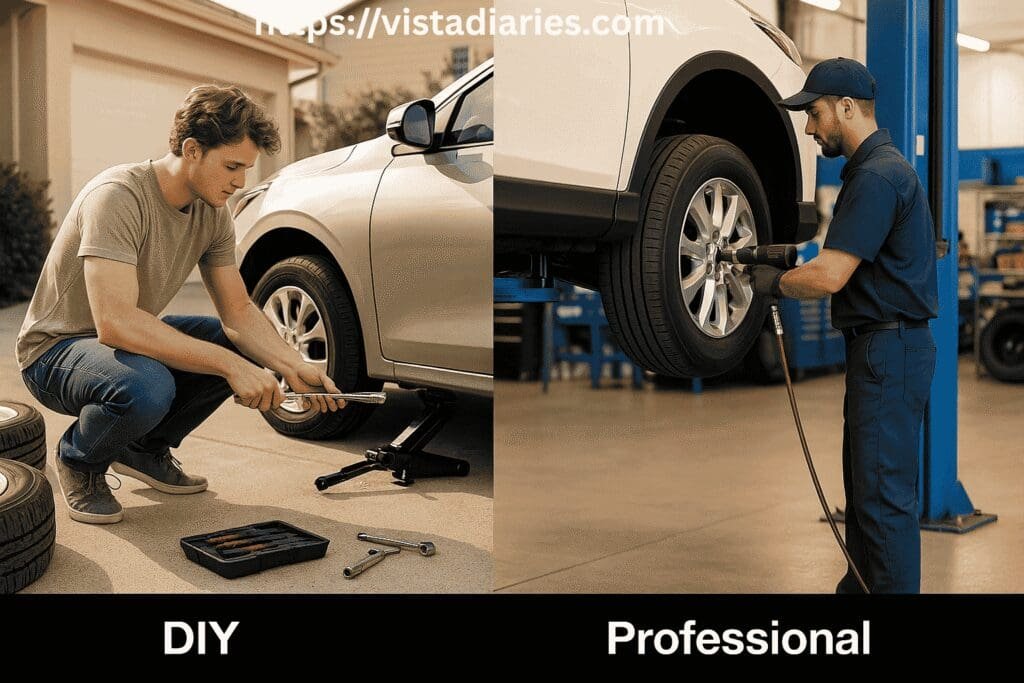
If someone has the necessary tools, stands, and understands the tire rotation pattern explained for their drivetrain, they can rotate their own tires at home. But for the majority of people, a tire rotation service near me is safer and still cheap.
A professional shop will:
- Appropriate torque specifications for wheel nuts
- Alignment and balancing are checked if necessary.
- Check the deepest tread and tire damage
- Front / rear pressure choices are also available
For the average car owner wondering how often to rotate their tires, the best answer is a combination of regular rotations by a professional shop and simple pressure checks at home.
Final Takeaway: Real Benefit
When you rotate your tires on time:
- Tire life can increase by 20–30%
- Braking and grip improve, so overall safety is higher
- The ride feels smoother with less vibration
- You save some fuel because the car rolls more efficiently
- On AWD vehicles, you help prevent expensive drivetrain repairs
How Often to Rotate Tires: Rotate your tires every 5,000–6,000 miles, as it saves you money, extends tire life, and makes your car safer and smoother to drive.