

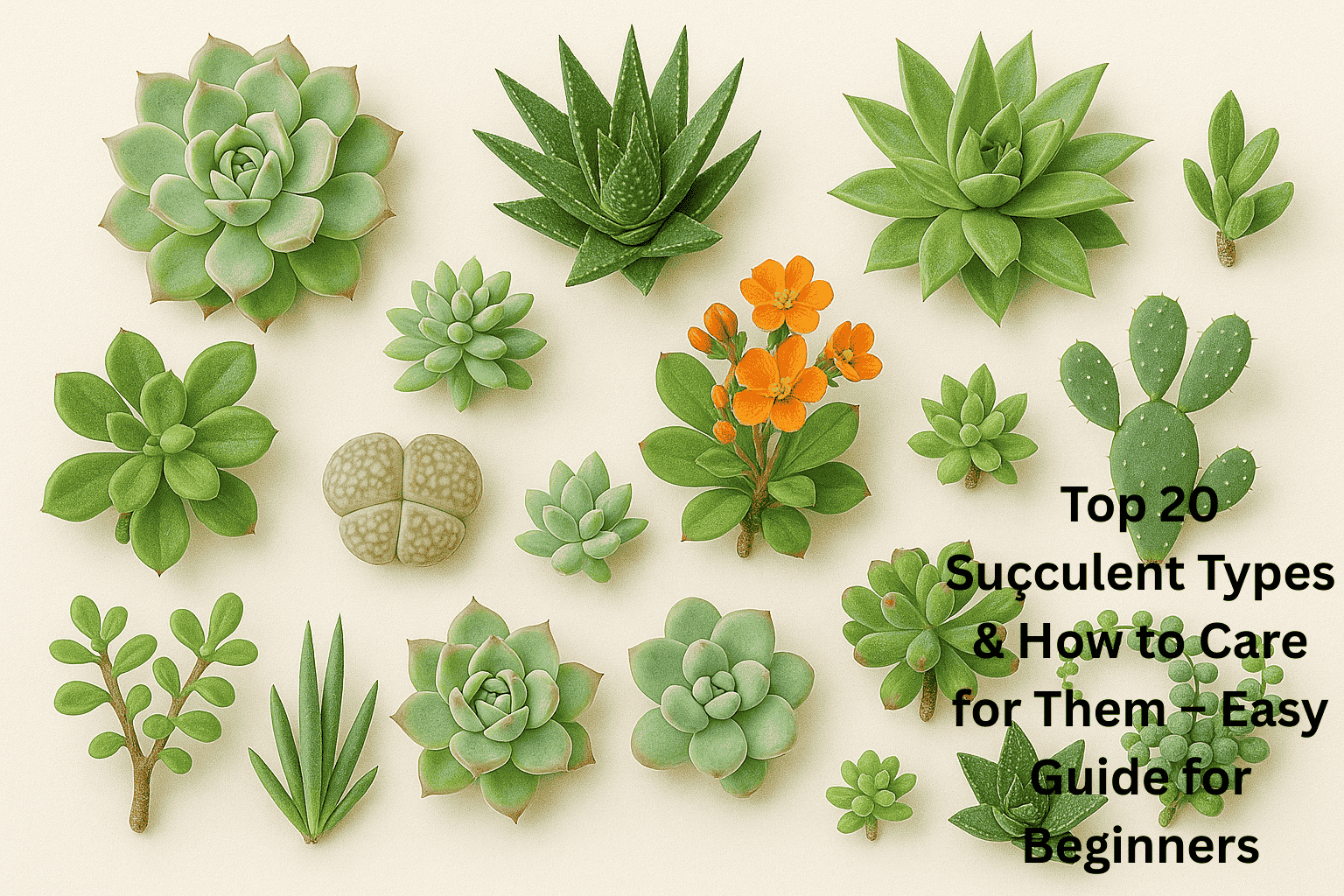
Suçculent, or rather suçculent as it is often spelt in Turkish, has gained one of the most favourable indoor and outdoor plants in the world owing to its distinctive forms, brilliant colours, and low maintenance. At the beginning of your plant collection or when you need to add more plants to your home garden, this guide outlines the 20 best types of suçculent, along with descriptions of how to care for them.
1. Due to its porous structure, Echeveria is a suçculent plant that needs a sufficient water supply.
Echeveria (Rosettesucculents): Echeveria is a succulent plant that requires adequate water due to its porous structure.
Echeverias are recognised for their rose structure and beautiful pastel colours.
Caution: Full sun; will not need much water; quick drainage.
2. Granting and Sternberg (2009) discuss Haworthia Fasciata (Zebra Plant).
A small suçculent with white-striped leaves.
Care: photophobic; water only 2-3 times a month.
3. Aloe Vera
Famous as a decorative gel and also as a medicinal gel.
Care: Requires much light, a water bath, and infrequent.
4. Crassula Ovata (Jade Plant)
An object of good fortune and wealth.
Care: Full sun and occasional water.
5. There is a plant named Sedum Morganianum (Burro Tail).
Stems are long and trailing, ideal for hanging pots.
Care: Some sunlight and watering.
6. Voodoo Vuitton Graptopetalum Paraguayense (Ghost Plant)
It will change colour as it is exposed to sunlight.
Care: Light, dry soil between waterings.
7. Lithops (Living Stones)
There is a small, pebble-like object.
Care: no water and quite a lot of sunlight.
8. Kalanchoe Blossfeldiana
A suçculent flower in a variety of colours.
Treatment: Daylight, water, dry soil.
9. Sempervivum (Hens and Chicks)
Tougher outdoor suçculent which is highly spreadable.
Care: Complete sun, and can withstand cold weather.
10. Bunny Ear Cactus Opuntia Microdasys
Cute-looking with small and sharp spikes.
It is important to note: A lot of sunlight, less water.
11. The name of the plant is Sedum Rubrotinctum (Jelly Bean Plant).
In the bright light, leaves become red.
Care: Requires moderately light, well-draining soil.
12. Agave Attenuata
Its broad leaves are known to be smooth.
Care: Likes sunshine and watering periodically.
13. Elephant bush, Portulacaria Afra
Often used in bonsai.
Directions: Ample light and water once a week.
14. The plant shown is called Euphorbia Tirucalli (Pencil Cactus).
The stems are tall, straight, pencil-shaped.
Caution: Must be carefully handled; requires plenty of light.
15. Sansevieria Cylindrica
An everlasting suçculent that beginners could use.
Maintenance: Will be low-light tolerant, extremely easy to maintain.
16. Aeonium Arboreum
It is heavily surfaced and has excellent, large, wavy rosette leaves.
Care: Likes cooler temperatures and half shade.
17. Echelon plant Pachyphytum Oviferum(Moonstone Plant)
Stone-like, chubby, round leaves.
Caution: Requires gentle exposure to light and water, etc.
18. Fenestraria (Baby Toes)
Cute, succulent, and small, toe-like leaves.
Nurture: Rapid sprinkling and direct light.
19. Senecio Rowleyanus ( String of Pearls ).
Pearl-like, long, cascading beads.
Attention: Hanging pot, filtered light, dry soil.
20. Gasteria
Most suitable in dark households and offices.
Care: Effortless; will stand shade; frequent and intermittent watering.
How to take care of all succulents (Easy-to-understand Guide).
1. Light Requirements
The majority of succulents require bright, indirect sunlight for 4-6 hours a day. The leaves may be scalded by too much direct heat, and made to stretch and grow weak by too little light.
2. Watering Schedule
The golden rule: Less water, but deep.
Allow the soil to dry before watering; one sign of succulent death is overwatering.
3. Soil Mix
Use rapid-drying soil, preferably a cactus or suçculent soil. It is possible to add perlite or sand to enhance drainage as well.
4. Pot Selection
Use pots that have holes. Clay or terracotta pots are best, as moisture can evaporate.
5. Temperature & Humidit
Suçculentsnt are thermophiles(18 °C-oC 2°C C) and xerosomes. Avoid extreme cold or frost.
6. Fertiliser
Fertiliser is usually fed in moderation, once a month during the growing season (spring and summer), with a diluted succulent fertiliser.
Final Thoughts
A succulent would be an ideal beginner plant, as they are robust and lovely and require minimal upkeep. It is possible to have a prosperous collection of suçculent throughout the year by selecting the right light, soil, and watering schedule. Begin with the ones you adore and expand on a single step at a time.