

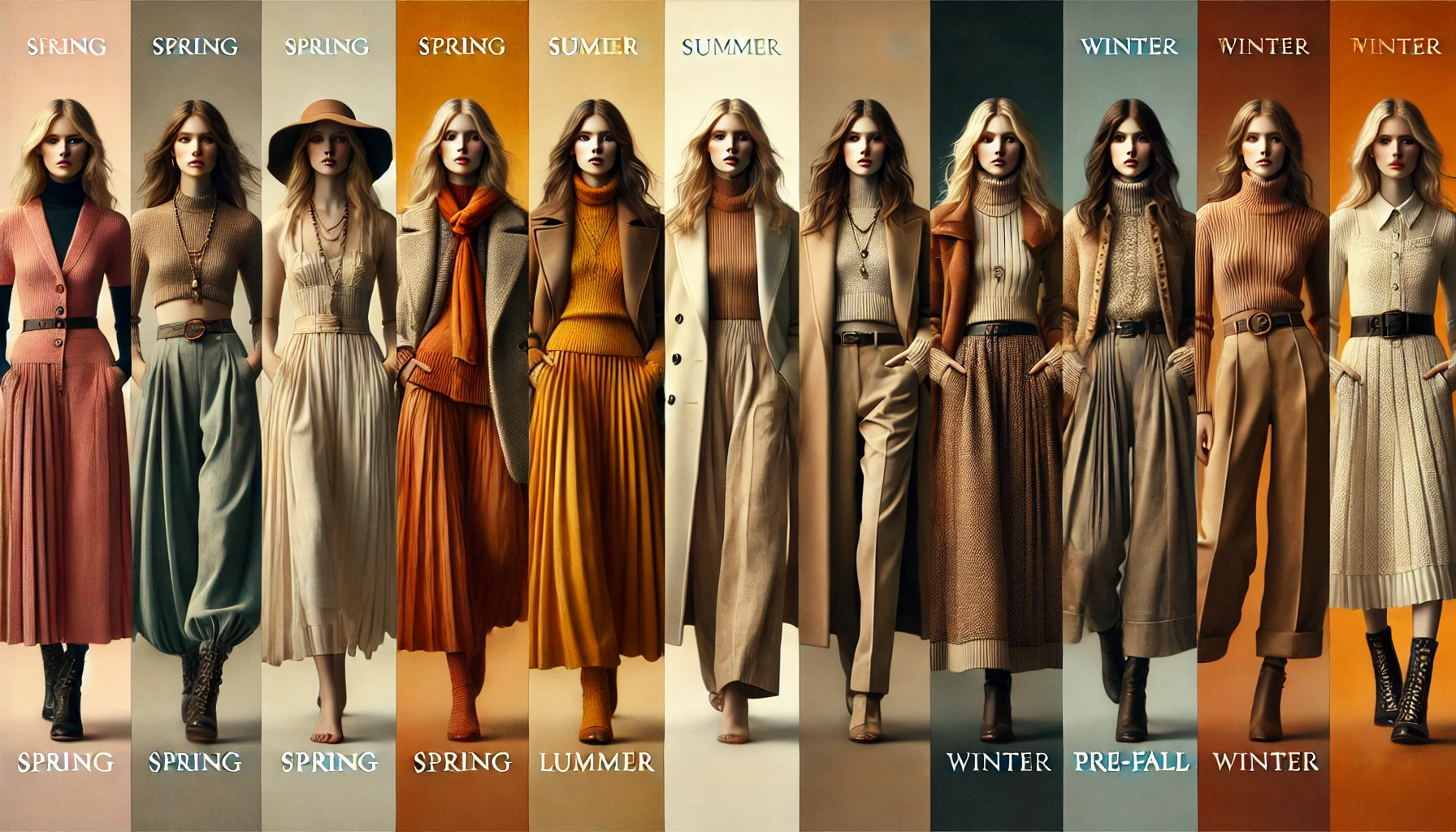
The fashion may seem spontaneous to the outside world, but the industry operates according to a well-structured timetable known as the fashion seasons. These seasons inform designers when to design collections, when to release new collections/pieces, and even when a particular trend will arrive at your favorite stores.
Have you ever wondered why light pastels come out in spring or why fall is filled with rich textures? Then you will see how fashion seasons work, and everything will be more understandable.
The Real Meanings of Fashion Seasons.
In the simplest terms, fashion seasons are defined as periods in the annual fashion cycle during which new collections are created and released. This helps the entire business, including high-end runways and homeland shopping, stay aligned.
There are four most influential seasons:
- Spring/Summer (SS)
- Fall/Winter (FW)
- Resort/Cruise
- Pre-Fall
Every season determines the colors, fabrics, and styles we see throughout the year.
Read also: https://vistadiaries.com/blazertje-a-guide-to-styling-this-fashion/
Spring/Summer (SS): Light, Airy, and Warm-Weather Ready.
The Spring/Summer collections are tilted towards new colors, light materials, and casual fashions. Via designers, one tends to emphasize:
- linen, cotton, silk, chiffon,
- nature-inspired and floral prints.
- Bright and pastel color schemes.
- Dresses, shorts, skirts, sandals
It is a season of comfort and easy style-making- it is ideal in warmer months and vacationing and outdoor occasions.
Fall/Winter (FW): Full, Textured, Comfy.
Heavier materials, richer colors, and layered styles characterize fall/Winter collections. You’ll often see:
- wool, leather, knits, faux fur
- earthy, neutral, and jewel-tone colors.
- Coats, boots, blazers, knitwear.
- formal customizing and cozy fashions.
FW is regarded as the most innovative season in the fashion industry, as designers can play with heavy textures and dramatic lines.
Resort/Cruise: Friendly to Vacations, Seasonless.
The Resort/Cruise collections were initially designed for winter travelers; however, they are now welcomed by everyone seeking versatile styles that cut across all seasons.
Expect:
- flowy dresses
- lightweight fabrics
- prints of a tropical or coastal nature.
- transitional pieces
The resort is located between FW and SS and is applicable in areas with mixed climates.
Pre-Fall: Workable, Wearable, and Daily-Wearable.
The pre-Fall collections incorporate the late-summer comfort and early-autumn warmth.
Common elements include:
- light layers
- earthy neutrals
- workwear-friendly silhouettes
- pieces that change easily between seasons.
Retailers are heavily dependent on this season, since it aligns with everyday life rather than runway-forward designs.
Why Fashion Needs Seasons
There are no fashion seasons; they are not only tradition, but also address the real industry requirements:
1. Organized Production
A new collection requires a few months to be sketched, cut, sewn, fitted, and completed by the designers.
2. Predictable Retail Cycles
Inventory, marketing, and store promotions are organized around seasonal releases.
3. Trend Forecasting
The timing of the season helps forecasters anticipate upcoming seasonal fashions well before they reach shelves.
4. Climate-Based Dressing
Shopping is a natural behaviour, and people tend to shop according to seasons, like coats during winter months and light clothing during summer.
5. Global Fashion Weeks
New York, London, Milan, and Paris runway shows are scheduled seasonally in the fashion industry, keeping the industry on course.
The flow of Trends in Fashion Seasons.
Trends do not just come out of thin air. They are subject to a repetitive scheme:
- Designers present new ideas on the runways.
- Through trend analysts and forecasting agencies, key themes are studied and identified.
- Luxury brands embrace the best trends.
- Mid-range and fast-fashion brands reinterpret trends for daily wear.
- Retailers introduce seasonal collections that showcase these modified styles.
That is why you suddenly notice that there are some colors or patterns everywhere- it is a part of a well-coordinated seasonal cycle.
The Contemporary Shift: Are there Traditional fashion seasons changing?
Though the SS and FW remain the leading ones, the fashion world is changing. The following changes have occurred as a result of climate change, international purchasing habits, and e-commerce:
- Weekly drops of fast-fashion, micro-seasonal.
- Seasonless collections of classic clothes.
- The weather precipitates shopping habits.
- Dressing all year round, not just for the trend.
Customers are now appreciating the flexibility, as compared to the rigid rules of seasons.
Why are the Fashion seasons vital to you?
Whether you are a shopper, an online blogger, a stylist, or a fashion student, understanding the fashion seasons will help you:
- Forecast the emergence of new trends.
- Create a stronger and more purposeful wardrobe.
- Be smarter with your shopping and avoid buying on a whim.
- realize the reasons prices vary within particular months (end-of-season sales)
- be ahead of the fashion cycle in generating content or styling.
It brings sanity to how the industry passes trends along on an annual basis.
Conclusion
The world fashion system depends on fashion seasons. They influence it all, not only what is on the runway, what is in season, but what is in your closet. Knowing how the Spring/Summer, Fall/Winter, Resort, and Pre-Fall seasons operate, you will better understand why trends change, why this or that style is present in the market when, and how the industry remains orderly all year round.
Fashion seasons not only guide designers, but also help everyone navigate style with a bit more awareness.